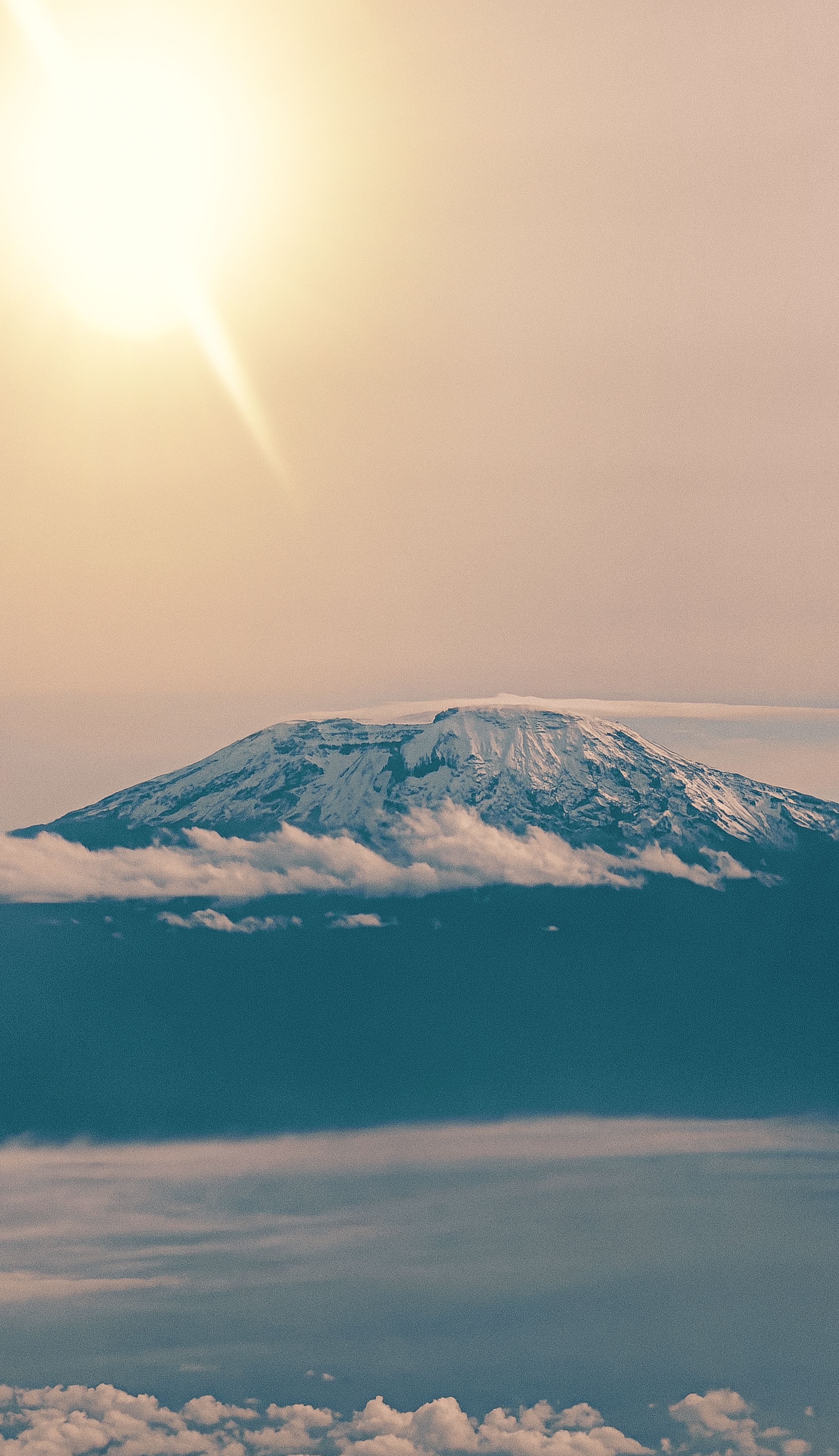
Kilimanjaro
Africa’s highest point rewards patience, not speed. We compose a climb around acclimatisation, honesty, and a crew who are paid and treated as they should be — because how you reach the summit matters as much as whether you do.
Where we stand
There is an industry around this mountain that measures itself in numbers — how many climbers, how fast, how cheaply. We understand the appeal. We simply do not build our climbs that way.
A climb rushed to save a day or two is a climb more likely to fail, and more likely to make you ill. The body needs time to meet the altitude. So we add the days that give you the best true chance of standing on the summit — and the best chance of enjoying the climb that gets you there. More days is not us selling you more. It is the honest way up.
We would rather put fewer people on the summit, well, than the most people on the summit, fast.
The people who carry the mountain
No one summits Kilimanjaro alone. Behind every climber is a team — guides, cooks, and porters carrying what makes the mountain survivable. It is one of the hardest jobs in Tanzania, and across much of this industry it is quietly one of the worst paid, with loads too heavy, wages too low, and gear too thin for the cold up high.
We will not build a climb on that. Every porter and guide on an Enkiama climb is paid a fair wage, carries a fair load, and is properly equipped for the altitude — and we tell you who they are, by name, as we do with every partner in every journey. The people who carry your climb are not invisible labour. They are the reason you make it.
If an operator cannot tell you honestly how their crew is paid and treated, that silence is your answer. We would rather you ask us the hard question — and we will answer it plainly.
What we hold ourselves to
These are the terms set by the Kilimanjaro Porters Assistance Project — the independent body that monitors how climbing crews are treated. We invite you to hold us, and any operator you consider, to them.
The route that fits you
There is a reason some operators steer everyone toward the quickest, cheapest path up the mountain: it moves more people, faster. But the shortest routes often carry the lowest success rates and the least time to acclimatise.
We choose the route around you — your fitness, your time, your experience, the season — not around our margin. Sometimes that means a longer, gentler line with better odds and finer scenery. Sometimes it means telling you honestly that now is not the moment, or that a different mountain, or the slopes rather than the summit, would serve you better.
The shortest line, for everyone
Fewer days, lower cost, more departures — and, quietly, lower success and less time to adjust to the height.
The right line, for you
The route matched to your body and your season, with the days acclimatisation actually needs. Composed for the summit — and for the climb itself.
Two ways to be changed by it
And we will tell you, just as honestly, that the mountain gives as much to those who never intend to summit it. Its southern slopes hold the Chagga farms and coffee that have shaped this region for centuries. Its forests, its moorland, its silence rearrange your sense of scale whether or not you reach the ice.
So we offer both, with a view: the summit for those who came for it, and the mountain for those who came to understand it. Neither is the lesser journey. Both are Kilimanjaro.
On every Enkiama climb
Whether you dream of the summit or the slopes, the climb begins the same way — with an honest conversation.