Watu
Beyond the animals
It is a country of more than sixty million people, over a hundred and twenty language groups, and a coastline that has been trading with the world for a thousand years. The wildlife is extraordinary. It is also not the whole story, and travellers who only see it leave having met a landscape rather than a country.
A country held together by a language
Tanzania has over a hundred and twenty ethnic groups and no dominant one. In many countries that arithmetic has produced fracture. Here it produced something rarer: Kiswahili as a national language belonging to everyone and no one in particular, deliberately promoted after independence as a way of building one nation from many peoples.
The effect is visible everywhere. A Chagga farmer, a Maasai herder and a Zanzibari trader meet in a shared language that is nobody’s tribal inheritance. It is one of the quieter achievements in modern African history, and it is part of why Tanzania feels the way it does to travel in.
The peoples
The Chagga, on Kilimanjaro’s southern slopes, farm some of the most intensively cultivated mountain land in Africa — coffee, banana and a system of irrigation furrows centuries old.
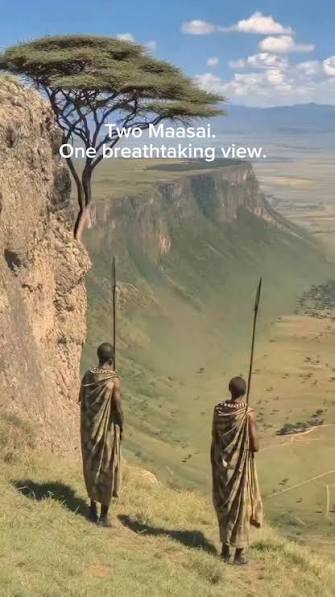
The Maasai, across the northern rangelands, are the most photographed and least understood, and their relationship with conservation land is far more complex than most visitors are told.
The Hadzabe, near Lake Eyasi, are among the last hunter-gatherer communities on earth, speaking a click language unrelated to almost anything around it.
The Swahili coast is not one people at all but a civilisation — African, Arab, Persian and Indian, layered over a thousand years of monsoon trade.
How we approach it
Cultural tourism in East Africa has a poor history: staged dances, arranged photographs, communities paid a fraction of what visitors spend. We will not compose that, and we would rather send you nowhere than send you to a performance.
What we do instead is arrange for you to be somewhere ordinary, with people who have agreed to it, on terms they set. A coffee farm where the work is real. A table where a meal is being cooked anyway. A guide from the community rather than about it. The exchange is fairly paid and openly explained, and if it cannot be done that way, we do not do it.
What travellers actually remember
We have noticed something over time. People arrive for the migration and leave talking about an afternoon in Kibosho. They come for the crater and remember a conversation on the way to it.
That is not an accident of luck. It is what happens when you are placed inside a country rather than beside it — which is the whole argument Enkiama exists to make.
Can I visit a Maasai community in Tanzania?
Yes, but how it is arranged matters enormously. Much cultural tourism is staged and poorly paid. We arrange time with communities on terms they set, fairly compensated and openly explained — or we do not arrange it at all.
What language is spoken in Tanzania?
Kiswahili is the national language and is spoken across the country alongside more than a hundred and twenty local languages. English is widely used in business and education. Learning a few words of Kiswahili is genuinely appreciated.
Is cultural tourism in Tanzania ethical?
It can be, and often is not. The test is whether the community set the terms and receive a fair share of what you pay. We will tell you exactly how any cultural element of your journey is arranged and what reaches the people hosting you.
Often composed alongside
If you are wondering whether Society & Culture belongs in your journey, ask us. We will tell you honestly.
Begin a conversation →